Integrated Global Logistics Management
WCM Worldwide manages integrated global logistics for industrial, mining, energy, and commercial clients across 97 countries. As an FMC-licensed NVOCC operating through 496 offices worldwide, WCM coordinates ocean freight, air freight, inland transport, customs clearance, and warehousing under a single management structure. Clients receive one accountable representative and one operational standard, regardless of how many modes, borders, or carriers a shipment requires.
Why Integrated Logistics Management Matters
Most freight challenges span more than one service category. A manufacturing client importing capital equipment from multiple European suppliers needs ocean freight inbound, port customs clearance, inland drayage to the facility, and staged delivery timed to the installation sequence. Managing those elements through separate providers creates gaps between handoffs, competing documentation standards, and no clear owner when something goes wrong.
WCM's integrated model addresses this directly. WCM takes accountability for the full movement, not for individual service segments. That accountability structure is what the YES I CAN operational culture means in practice: WCM does not pass problems to partners. WCM solves them.
Logistics Services
Multi-Modal Transport Coordination
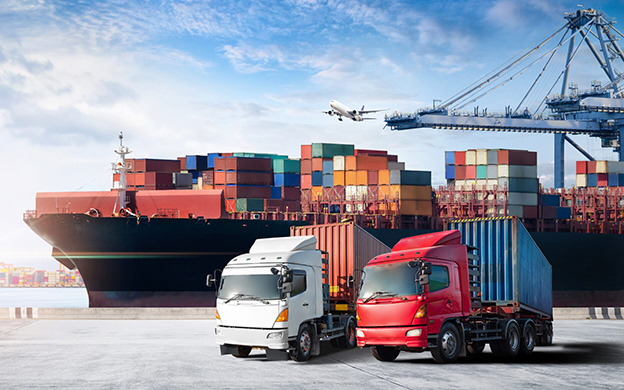
WCM designs and manages freight movements combining ocean, air, rail, and road. Mode selection is based on cargo type, transit time requirements, infrastructure availability, and cost, including multi-modal programs that assign the right mode to each shipment element.
Inland Drayage and Final Mile Delivery
WCM coordinates port-to-facility drayage with scheduling, carrier selection, and exception management during congestion or equipment constraints. For oversized cargo, WCM integrates heavy haul into a broader project logistics plan, including remote and access-restricted delivery.
Customs Coordination Across Markets
WCM manages import and export customs processes across served markets, working with licensed brokers and in-country agents to support compliant documentation, timely clearance, and duty accuracy.
Carrier Management and Procurement
With FMC-licensed status and direct relationships across ocean, air, and road networks, WCM supports carrier-neutral routing on each shipment. Procurement, led by VP Jim Rinchiuso, manages contracts and space allocation across trade lanes.
Shipment Visibility and Tracking
Clients access real-time tracking through WCM's logistics portal for visibility across active movements. Proactive exception management identifies and addresses disruptions before they become delays.
How it works
WCM maps your lanes, cargo profiles, delivery requirements, and constraints to define the operating model.
Ocean, air, inland, customs, and warehousing roles are coordinated under one standard and one owner.
WCM manages bookings, milestones, documentation, and carrier coordination, resolving disruptions end-to-end.
Tracking and reporting support informed decisions and ongoing refinement of cost, reliability, and timing.
One accountable team for complex freight
Integrated logistics management is the difference between managing shipment segments and managing outcomes. WCM coordinates each mode, border, and handoff as one controlled program so you don't inherit the gaps that multi-provider models create.
Accountability when something goes wrong
When congestion, documentation errors, carrier rollovers, or last-mile constraints disrupt a schedule, WCM owns the resolution path. You get one representative, one operational standard, and proactive correction—without being bounced between providers.
Sectors WCM Serves
WCM's logistics management capabilities are applied across industrial sectors where freight complexity demands more than a standard forwarding relationship. Mining operations managing equipment procurement from multiple international suppliers rely on WCM's integrated approach. Energy and infrastructure project clients managing multi-component, multi-origin project freight use WCM's coordination to bring sequential deliveries together on schedule.
FAQ
A freight broker arranges individual shipments between shippers and carriers without ongoing accountability. An integrated logistics manager like WCM takes responsibility for the full supply chain program, managing multiple modes, customs, warehousing, and documentation under a single accountability structure. The distinction is most visible when disruptions occur: a broker reports the problem, WCM solves it.
Yes. WCM's 496-office global network includes coordination capability in remote mining regions, developing-world ports, and landlocked destinations where most providers cannot offer direct service. WCM's track record includes rail intermodal to remote border crossings, heavy haul to mine sites, and multi-modal programs through infrastructure-constrained corridors in West Africa, Central Asia, and South America.
Yes. WCM manages inbound and outbound freight programs for US and international clients, covering export customs, ocean and air carrier bookings, foreign destination customs clearance, and local delivery coordination through its global office network.
Build Your Logistics Program with WCM
WCM works best when engaged at the program level rather than on individual shipments. Share the scope of your freight requirements with a senior WCM representative and receive a logistics framework designed to reduce cost, improve transit reliability, and eliminate the accountability gaps that multi-provider models create.
Call: (800) 209-5601 | Email: info@wcmchs.com